
Image
From The Plant Press, Vol. 28, No. 3, July 2025.
By Gary A. Krupnick
The Smithsonian’s National Museum of Natural History (NMNH) Department of Botany, the United States Botanic Garden (USBG), and the Smithsonian Gardens held the 22nd National Botanical Symposium, “The Future of Collections-Based Plant Science,” on May 16, 2025. The hybrid event brought together five engaging speakers who presented their research to an in-person audience and a virtual audience from around the world. Scientists from universities, herbaria, and botanic gardens spoke about how the goals, missions, and objectives of these institutions are adapting to a modern era while stewarding important preserved and living collections. This symposium brought a fresh outlook into a new vision for collections-based plant science.

Jun Wen, NMNH Curator of Botany and Chair of the Department, welcomed the audience to the symposium. Rebecca Johnson, the CW Whitney Chief Scientist and Associate Director for Science at NMNH, highlighted the mission of the Smithsonian as well as the immense collections housed in the museum and especially the U.S. National Herbarium. She spoke of how the collections from the U.S. Exploring Expedition of the 1830s were the foundation of the museum’s collections, and how the entirety of the herbarium’s pressed plants is fully digitized and can be used in innovative ways. Susan Pell, USBG Executive Director, also provided opening remarks and spoke of the living specimens from the U.S. Exploring Expedition that still live today at the USBG. Pell spoke about the garden’s history, a description of the living collections, their scientific research, and their scientific and conservation partnerships.
Laurence Dorr, NMNH Curator of Botany, presented the José Cuatrecasas Medal for Excellence in Tropical Botany to Lynn G. Clark, an accomplished professor in the Department of Ecology, Evolution, and Organismal Biology at Iowa State University and Director of the Ada Hayden Herbarium in Ames, Iowa. In addition to a biographical sketch focusing on her taxonomic work of tropical bamboos, Dorr also highlighted Clark’s volunteer work in the U.S. National Herbarium during her summer breaks as a high school student. Her connection to the herbarium, Dorr concluded, gave Clark a unique familiarity with the Smithsonian compared to past Medal awardees. Accepting the award, Clark gave thanks to her parents, who were in the audience. She also remarked about how we need to continue to speak up for our collections and our research and for biodiversity.

The first presentation was delivered by Lúcia Lohmann from the Missouri Botanical Garden. She opened her talk, “Biodiversity and innovation: Bringing herbaria to their full potential,” with a broad description of how herbarium collections are important as a key source of botanical data and how they are windows into the past. She emphasized that with the current rate of biodiversity loss, the immense value of herbaria is only going to increase over time, and that collections are still an untapped resource in conservation research.
She described four key steps that can accelerate that rate of taxonomic research. First is to increase accessibility by digitizing herbarium collections. Second, high-quality species identification can increase with the use of new technologies such as hyperspectral scanning and machine learning. The third step is to synthesize data into unified platforms. One attempt, the World Flora Online, is working well as a network for taxonomic experts. But Lohmann would like these online collections to be places where everybody interested in plants could go and find the information that they need, including all the extended specimen data, such as photographs, distribution data, tissue samples, DNA extractions, evolutionary analyses, and so forth. The final step is distributing data to diverse stakeholders, bridging academia with government and society, and bringing everybody on board about the importance of nature to help us address global challenges ahead. She concluded her talk by discussing her long-term vision of herbarium research.

The second speaker of the day was Emily Coffey from the Atlanta Botanical Garden, who gave the presentation, “The crucial role of botanical gardens in plant conservation.” To complement Lohmann’s presentation about the value of preserved collections, Coffey emphasized the importance of living collections in food security, water scarcity, ecosystem stability, medicines, economic stability, energy, human health, biodiversity conservation, and climate change. She argued that botanical gardens are uniquely equipped to be part of the solution by combining horticultural and scientific expertise with the physical infrastructure needed to care for some of the world’s most imperiled plants, growing awareness among the public, and bringing together scientists, policymakers, and community members around a shared goal of safeguarding plant diversity for future generations.
Coffey made the bold argument that there is no technical reason why any plant species should become extinct. She says that we have the tools, but we lack alignment—we need to shift how our resources are allocated, from a deeper investment in capacity building to a shift in our collective priorities, such as funding. She spoke about four current challenges in ex situ conservation: (1) prioritizing endangered species, (2) integrating with in situ conservation, (3) overcoming challenges of germination and cultivation, and (4) maintaining genetic diversity. On that final challenge, she offered a solution: metacollections—a collection of collections, or a group of institutions working together to collectively prevent extinction and to steward collaboratively their collections of many species. She concluded with a list of how individuals can help prevent plant extinction.

Emily Meineke from the University of California Davis spoke about “Herbivory through the ages: Applying paleoecological methods to herbaria to investigate modern global change.” She focused her talk on how insect herbivores respond to the ways in which humans are changing the environment, from climate change and pesticides to land use change and the loss of host plants, and we can see that response in herbarium collections. The two questions that motivate Meineke’s research are (1) has herbivory changed over the past century, and (2) are insects declining uniformly? Herbarium specimens are a promising resource to reconstruct these historical interactions over time, Meineke explained, since insect leave characteristic marks when they feed on plants. In one study, Meineke found the prevalence of herbivory on specimens increased from 1896 to 2008 across four northeastern U.S. plant species, and that for three of these species, herbivory increased with rising winter temperatures. The increase in herbivory can be explained through the expansion of insect ranges or through higher abundances of native insects with warmer winters.
Meineke next asked about whether insects are declining uniformly. She spoke about a study which her team identified and quantified insect damage to leaves of valley oak, Quercus lobata, in California from 1901 to 2022. They found that like in New England, herbivory is increasing over time in valley oak; climate warming in summer is partially responsible, along with other factors like the introduction of non-native species; insect richness on valley oak is increasing over time; and some insects seem to require winter chilling that fuels diapause. An important take away, she explained, is that insect decline does not necessarily yield decreasing herbivory on plants. Abundant plants still support their insect herbivores. Many insects are declining because they are losing access to their host plants. She concluded her presentation by being grateful for the curation of museum specimens.

Richard Primack from Boston University presented a comparable study, “The promise of digital herbarium specimens in large-scale phenology and climate change research.” For the past 20 years, Primack and his students and colleagues have been investigating the effects of climate change on plants using herbarium specimens. Using plants grown at the Arnold Arboretum, they have been able to compare springtime observations of plants in full flower today and compared them to the timing of flowering noted on herbarium specimens of the exact same plants in previous decades. They found that plants are flowering earlier over time, and they are flowering earlier in warmer years. The same pattern holds for the timing of leafing out for trees, and the same pattern holds across space for plants in Asia, Europe, and North America.
Primack described the results from studies performed colleagues in the topics of hysteranthy (flowering before leafing out), sex-differences in flowering phenology, and the effects of urban ecology on phenology. He then covered how they are combining historic specimen data with modern iNaturalist photograph data, in which this relatively recent citizen science network has generated a huge amount of data. He concluded his presentation by pointing out the importance of recognizing biases and then discussed important future directions related to key questions in ecology and evolution, the expansion of digitization efforts and analyses, the improvement of the quality and pace of data collection, and the increase in the standardization of taxonomy.

The final invited speaker of the day was Rebecca Dikow from Yale University, who spoke about “Connecting the dots: people, data, and natural history collections.” She focused her talk on how digitized specimens can not only tell us the story of science but also the people who did it. She explained that we may overlook the contributions of certain scientists, particularly historical women, if we only focus on published papers and awards. She began by first discussing the life and work of Mary Vaux Walcott, a botanist, artist, and philanthropist, who was married to Charles Doolittle Walcott, a former Secretary of the Smithsonian Institution. The efforts to uncover Walcott’s work was primarily due to the efforts of Smithsonian botanist Vicki Funk and archivist Effie Kapsalis who helped develop the Funk List, a list of Smithsonian women in science. In the case of Walcott, Dikow showed two species collected on the same trip by Walcott, with one label showing “Mary Vaux Walcott, July 1937,” and the other showing “Mrs. Charles C. Walcott, 1937.” The digital database, however, listed M.V. Walcott for the first specimen, but C.D. Walcott for the second specimen. Dikow showcased several more examples where the digital archive showed as if specimens collected by women had been collected by their husbands instead.
Dikow discussed solutions to the challenges of transcription, such as the platform Bionomia which looks at aggregated data from different museums and reconciles those differences in how people's names are written. In one of Dikow’s studies, she found that 40 deceased women are now attributed to more than 120,000 specimens across multiple disciplines. Dikow described these specimens taxonomically and geographically. She concluded her talk by emphasizing that GBIF (the Global Biodiversity Information Facility), Bionomia, and the Biodiversity Heritage Library are essential infrastructure to enable the future of collections-based research and that artificial intelligence (AI) and other computational tools depend on good data which depends on people’s efforts.
The Symposium wrapped up with a panel discussion moderated by Susan Pell (USBG) and the five speakers. Questions from the moderator and the in-person and virtual audiences included: how important is it to utilize more than one collection type in the research that you do?; what is the most surprising thing that you have discovered using collections?; are there organizations that utilize citizen collectors for submission to herbaria?; are there efforts to expand images of micromorphological characters of specimens to accompany digitized specimens?; with limited resources, where should priorities lie?; and what is the next big thing in your collections-based research? To hear the fascinating responses to these questions and others by each of the speakers, watch the video recording available on YouTube.
The Symposium concluded with evening events at the U.S. Botanic Garden’s Conservatory, including a closing reception and a poster session.

Smithsonian Gardens and Smithsonian Libraries and Archives provided optional behind-the-scenes tours the morning of the Symposium. Both units offered two sessions each and all were well attended.
Staff from the Smithsonian Gardens (SG) led a tour around the NMNH grounds (organized by Eric Calhoun, former SG Supervisory Horticulturist). Marisa Scalera, SG Landscape Architect, along with Sarah Hedean, SG Living Collections Manager, highlighted the completion of a multi-year and multi-agency project: preserving the Smithsonian Gardens Tree Collection along Constitution Avenue outside the National Museum of Natural History. Funded through the Smithsonian’s Collections Care Preservation Fund, the project had three components: street tree fencing, soil remediation, and native groundcover plantings. The historic Constitution Avenue elms are cultural elements of Washington, DC’s Monumental Core; safeguarding these trees and preserving the space around them had an added benefit of uplifting the Smithsonian’s curb appeal.
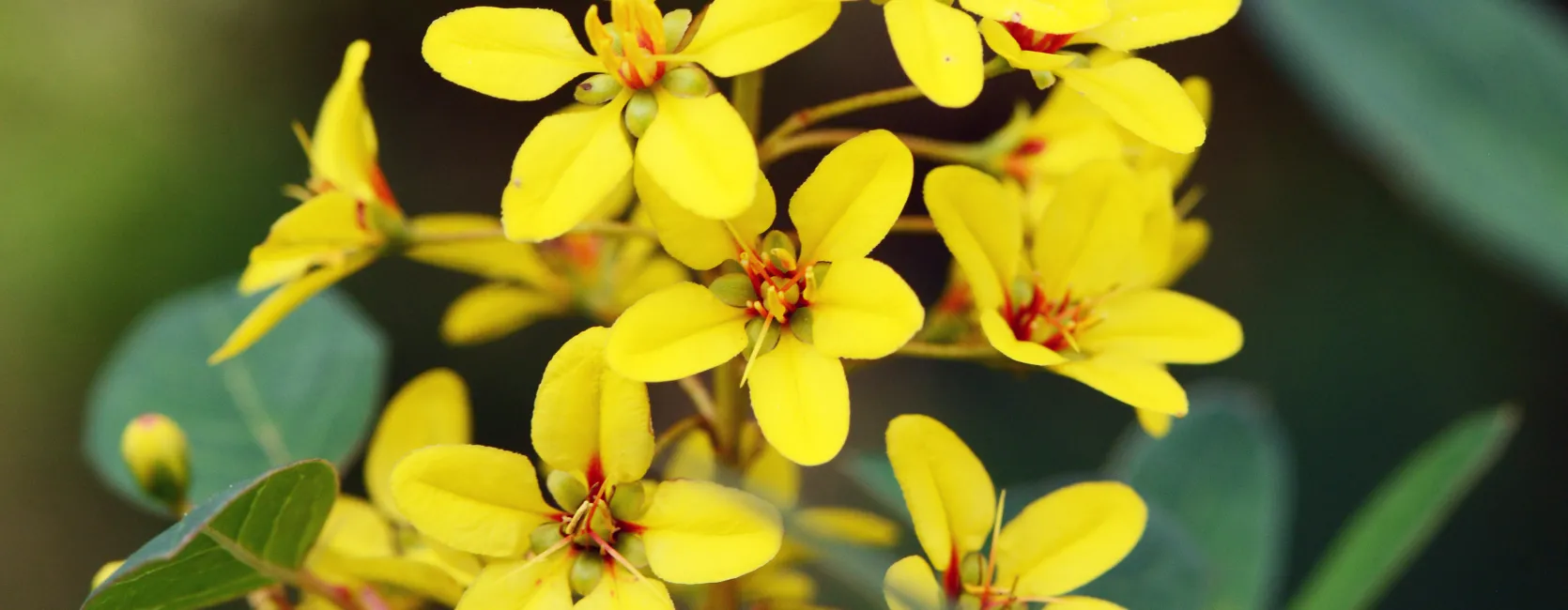
Sylvia Schmeichel, SG Horticulturist, talked about the design of the pollinator garden on the east side of NMNH, and discussed the value of introducing new species to the collections, like the corkwood tree. SG Horticulturist Mike Allen walked the group over to the west side of NMNH to showcase the urban bird habitat area. Here he discussed the care of these living collections: deadheading to encourage more flowering, and allowing plants go to seed/fruit for wildlife food.
The Smithsonian Libraries and Archives hosted a tour of the Joseph F. Cullman 3rd Library of Natural History. Leslie Overstreet, Curator of Natural History Rare Books, and Sydney Fitzgibbon, Library Technician, provided background information about the selected botanical books on display. Overstreet also talked about the uniqueness of the library and the services offered. Participants were able to peruse the books up close to view the detailed illustrations about taxonomy, collecting expeditions, and techniques for transporting plants and seeds.
Attendees were also given a bonus view into the temperature and humidity-controlled vault housed within the Cullman Library where they were able to see Jonathan Singer’s Botanica Magnifica (2009), a lavishly bound massive double elephant folio volume of 250 photographs of exotic and rare flowers and plants.
The symposium attracted an audience of over 330 attendees, with about 150 people in-person and over 180 people online. Those who viewed the proceedings online watched from 13 countries around the world. All speaker presentations, opening remarks, the presentation of the José Cuatrecasas Medal, and the roundtable panel discussions were recorded and are available for viewing on NMNH’s Natural History for Scientists YouTube page <https://www.youtube.com/watch?v=YrUrnbKksIY&list=PLQmxS2U3B6Kbo8GKodMg6FB6K5EHaBaVI&index=34&t=8s>.
The 23rd National Botanical Symposium is tentatively scheduled to take place at the National Museum of Natural History and the U.S. Botanic Garden on Friday, May 15, 2026. The topic is still to be determined. Check the Department of Botany’s website for updates.
Video playlist of the 22nd National Botanical Symposium: