
Image
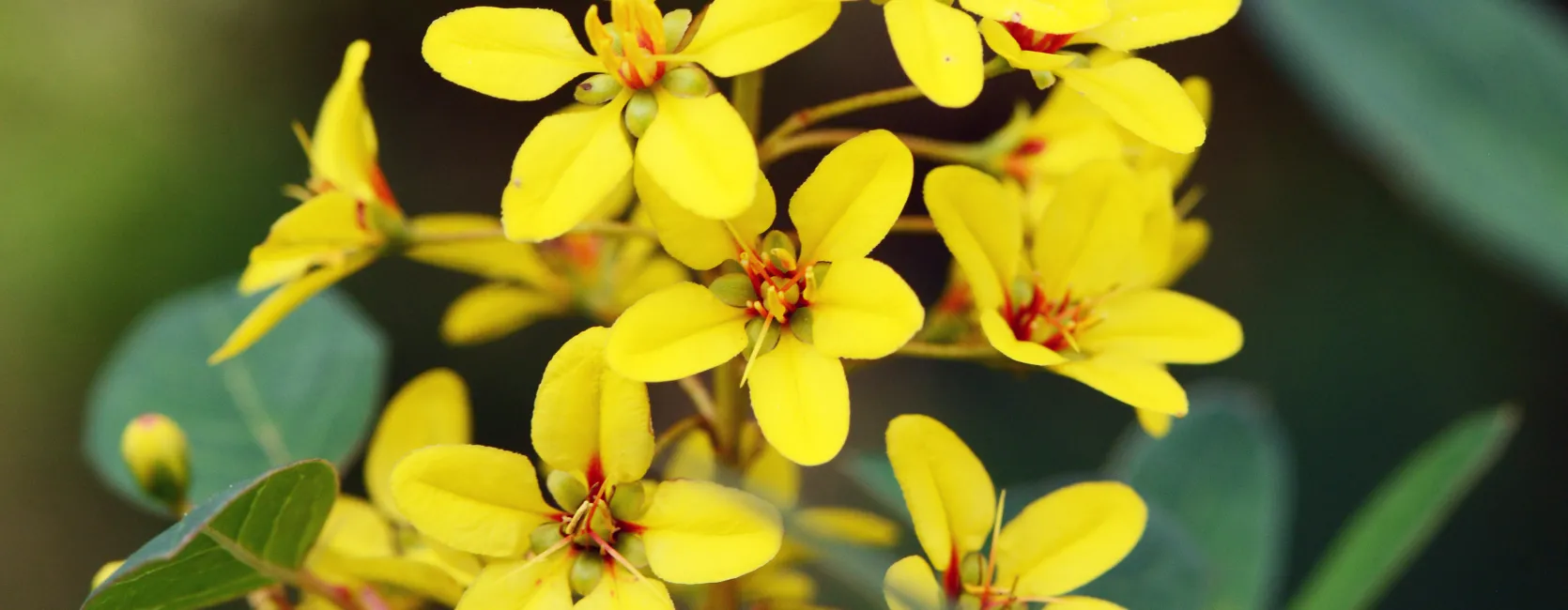
From The Plant Press, Vol. 28, No. 2, July 2025.
-Adapted from Pollinator Partnership
An international team of scientists from Mexico, the United States, and Costa Rica recently published a literature review that compiles the research from 340 scientific articles on how climate change is disrupting plant reproduction. The paper titled, “Untangling the complexity of climate change effects on plant reproductive traits and pollinators: a systematic global synthesis,” was published in the journal Global Change Biology (31: e70081, https://doi.org/10.1111/gcb.70081).
The basic findings of this study show that climate change is reshaping how plants and animals interact. Disruptions in these relationships may occur when plants and pollinators no longer co-exist in space or time, or when floral characteristics no longer match the needs and behaviors of their animal pollinators. Climate variations may impact floral attraction and reward traits, affecting the health, reproduction, and survival of plants and pollinators.

The study, led by Silvana Martén Rodríguez of the Universidad Nacional Autónoma de México (UNAM), included a team from UNAM, as well as authors affiliated with Instituto de Ecología, A.C., Universidad Autónoma de Guerrero, Universidad Autónoma de Yucatán, Universidad Michoacana de San Nicolás de Hidalgo, Universidad de Costa Rica, Smithsonian's National Museum of Natural History, and University of Kansas.
Co-author Gary Krupnick of the Smithsonian’s National Museum of Natural History points out that “This paper shows how climate change is increasing the risk of temporal mismatches between plants and pollinators worldwide, which can have serious negative impacts on biodiversity and ecosystem health.”
The effects on flower production, plant reproductive success, and pollinator abundance vary depending on geographic location, temperature, and water availability. Most pollinators experience negative impacts on their health and life cycles due to rising temperatures. Drought, extreme weather, and land-use changes further worsen these effects, posing even greater challenges for the conservation of plants and pollinators. The study also highlights how research on climate change’s impact on plants and pollinators is imbalanced throughout the world, and many plant and pollinator groups remain highly understudied. Even for the most well-studied ecosystems, information on most plant and animal species is still limited.
“The report underscores the need for broader global research, especially in tropical, arid, and icy regions and in underrepresented plant and pollinator species worldwide,” says Martén Rodríguez.
The rhythms of life, shaped by millions of years of evolution, are being altered by our rapidly changing climate. The relationship between plants and their pollinators is particularly vulnerable, and the survival of nearly all terrestrial ecosystems hangs in the balance. Our planet’s future will be defined by how well we understand and safeguard these vital connections.
Luckily, individuals everywhere have the opportunity to support the globe's pollinators and native plants. To learn more about this publication and to see how you can help fight climate change while supporting biodiversity, visit the North American Pollinator Protection Campaign (NAPPC) at www.nappc.org.
For over 23 years, NAPPC has brought together stakeholders from all sectors of the pollinator issue in a collaborative partnership to support pollinator health across the North American continent. More than any other single organization, the collective effort of these 180 plus organizations has made pollinator health a feature in conservation landscape management. From its many Task Forces, NAPPC affects change and moves solid science into real progress on the ground. The recent Global Change Biology publication is just one of many outputs produced by NAPPC Task Forces. The National Museum of Natural History has been a proud partner of NAPPC since its inception.