
Image
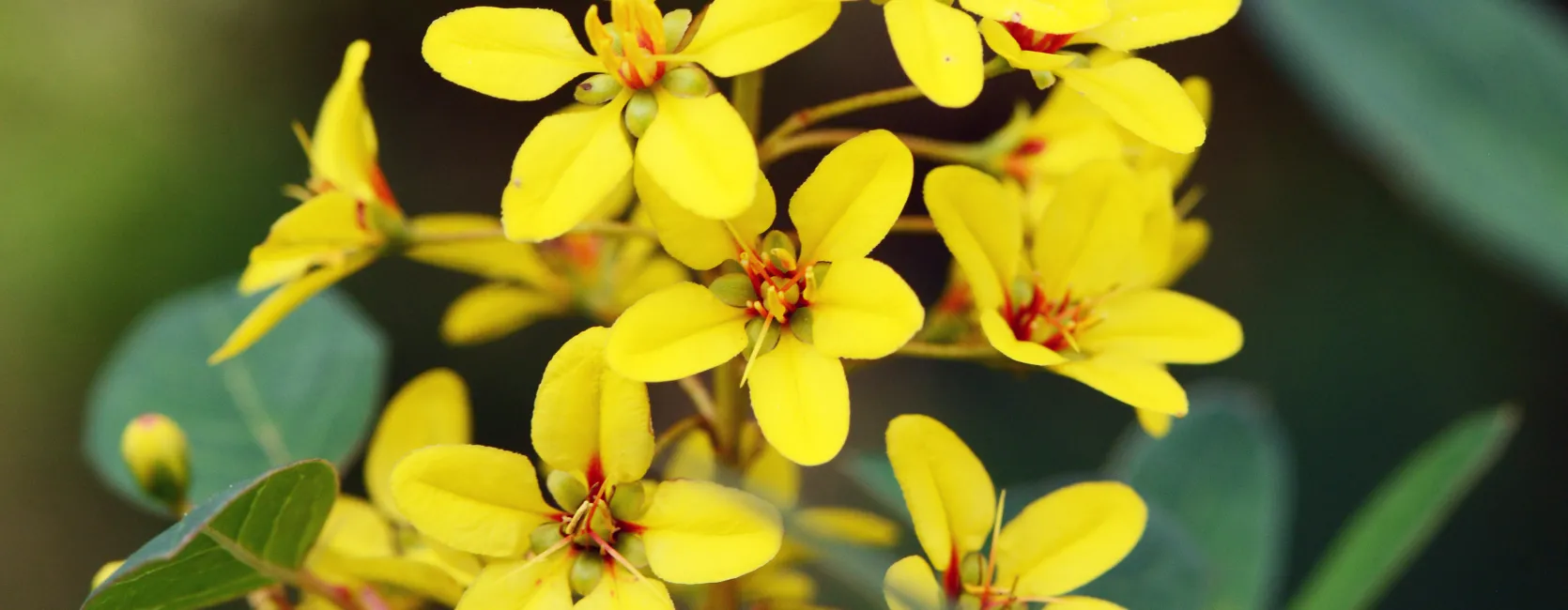
From The Plant Press, Vol. 26, No. 3, July 2023.
By Jorge A. Santiago-Blay and Joseph B. Lambert
For the past 25 years, Jorge Santiago-Blay, a Research Associate in the National Museum of Natural History’s Department of Paleobiology, and Joseph Lambert, Trinity University, have had a long-standing collaboration on the analyses of plant exudates, the usually sticky and organic substances that many plants produce.

Although the chemical variation of these materials is enormous, as far as the team knows, plant exudates come in a surprising limited number of molecular types, as revealed by nuclear magnetic resonance spectroscopy (NMR). The three most common types are: 1) resins, whose molecular building block is isoprene, a five-carbon molecule; 2) gums, whose molecular units are monosaccharides; and 3) phenolics, whose molecular unit is phenol. Amber, a fossilized resin, is a material noted for its beauty, human uses, and amazing preservation of biological materials. The term “latex”, given for the milky substance that some plants produce, is a chemically meaningless term. Thus far, all “latexes” the team has examined are resins.
Santiago-Blay and Lambert continue to analyze these materials and write scientific papers in peer-reviewed venues. Some recent papers include the study of exudates from ferns, cycads, ginkgo, and gnetophytes (Life: The Excitement of Biology 4: 215-232; 2016), the resinous cargo of a Java Sea shipwreck (Archaeometry 59: 949-964; 2017), and the characterization of phenolic plant exudates by nuclear magnetic resonance spectroscopy (Journal of Natural Products 84: 2511-2524; 2021).
If you come across these products out in nature or in collections, please contact Santiago-Blay and Lambert so that they may analyze the exudates via NMR. Santiago-Blay may be reached at blayj@si.edu, and Lambert may be reached at jlambert@trinity.edu.